Equipment

Filtration of Pre-Treatment
Screen
This page provides selection criteria, operating conditions and design reference information for a Perforated Plate Screen used in wastewater pretreatment systems.
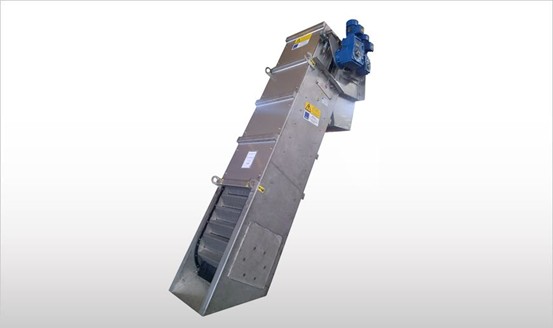
The Perforated Plate Screen is a mechanical screening equipment installed in the influent channel or downstream of coarse screens to remove rags, plastics, fibers and suspended solids before pumps and biological treatment units.
By preventing clogging, abrasion and floating debris carry-over, the screen protects downstream equipment and stabilizes plant operation in municipal and industrial wastewater facilities. It is commonly applied as a fine screening equipment in wastewater treatment plant design.

Structure and Principle
The screen operates using a continuous perforated belt driven by a geared motor.
- Influent enters the channel
- Solids are captured on perforated plates
- The belt lifts debris above water level
- Screenings are discharged by gravity
- Brushes and spray washing remove residual materials
- The belt returns to filtration zone
The continuous filtration mechanism maintains stable hydraulic headloss and prevents sudden upstream water level rise caused by clogging.
Description
Main components include:
- Drive unit (motor + gearbox)
- Stainless steel perforated belt
- Cleaning brush mechanism
- Structural frame and sealing side plates
- Electrical control panel
- Optional spray washing system
The enclosed belt structure prevents rag wrapping and jamming commonly observed in rake bar screens.
Features
- Stable screening efficiency for solids ≥ 6 mm
- Reduced clogging risk in fibrous wastewater
- Continuous operation capability
- Low maintenance requirements
- Suitable for high hydraulic loading
- Protects pumps and downstream units
- Reduces floating materials in aeration tanks
Under high rag loading conditions, perforated plate screens provide more stable operation and lower jamming risk compared with rake or rotary screens.
System Flow
Typical pretreatment arrangement:
Influent → Coarse Screen → Perforated Plate Screen → Pump → Grit Removal → Primary Treatment → Biological Treatment
The perforated plate screen functions as a fine screen protecting pumps and grit chambers.
When to Use a Perforated Plate Screen
A perforated plate screen is recommended when wastewater contains fibrous materials such as wipes, textiles and plastics.
Typical selection conditions include:
- Frequent pump clogging
- Floating debris in aeration basins
- Required opening size below 10 mm
- High rag or plastic loading
- Need for stable hydraulic headloss
- Continuous 24-hour operation
If solids consist mainly of sand or non-fibrous particles, alternative screen types may be considered.
Capacity
-
Hydraulic capacity depends on:
- Effective screening area
- Perforation size
- Influent suspended solids concentration
- Allowable headloss
Typical application range:
Small pumping station: 100–500 m³/h
Municipal WWTP: 500–10,000 m³/h
Large plants: >10,000 m³/h (multiple channels)
Application
- Municipal wastewater treatment plants
- Pumping stations
- Industrial wastewater treatment
- Food processing plants
- Pulp & paper industry
- Water reuse systems
- Desalination pretreatment
Especially suitable for high fiber or rag-rich wastewater.
Related field & Technology
- Coarse bar screen
- Grit separator
- Screw conveyor
- Screenings compactor
- Primary clarifier
- Aerated grit chamber
Technical Information
Material: SUS304 stainless steel
Surface treatment: pickling and passivation
Corrosion protection coating for long-term outdoor operation
Others
Frequently Asked Questions
What is the difference between a perforated plate screen and a bar screen?
Perforated plate screens handle fibrous materials better and reduce clogging risk, while bar screens are primarily used for coarse solids removal.
What opening size should be selected?
Typical openings range from 3–10 mm depending on downstream equipment protection requirements.
Can it replace a fine screen?
Yes, it is commonly used as a fine screening device downstream of coarse screens.
Does the screen clog easily?
The continuous belt and brush cleaning system maintain stable operation even in rag-rich wastewater.
Is continuous operation required?
Operation may be automatic by level control or continuous depending on plant design.